
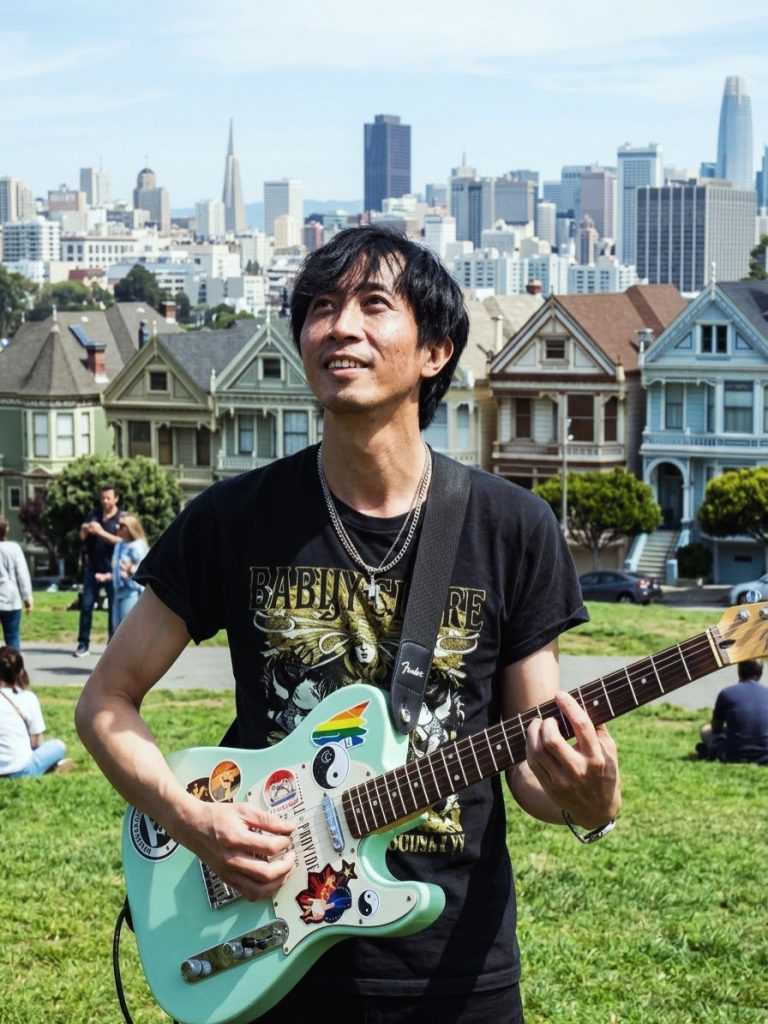
The Later, The Better is Patrick Lew Hayashi’s raw, unapologetic return to the guitar-driven underground that first made him fall in love with music. Based in San Francisco, the project draws from the sneer of garage punk, early ’90s Sub Pop grunge, and the disorder of basement shows. There is little interest in mythology, elaborate personas, or glossy production. Patrick stays at the center, handling guitars, bass, vocals, songwriting, and much of the production from his own computer.
That stripped-down setup suits the music. His nasal speak-shout cuts through grungy riffs, rough textures, and intentionally unruly arrangements that chase the feeling of a band playing far too loud at 1 a.m. in a dive bar. Modern tools, including stem repair and digital production, help shape the finished recordings, but the core impulse remains simple: play guitar, make noise, and build something on independent terms. The Later, The Better sounds like a passion project because it is one, with punk attitude functioning as a working method rather than decoration.
That spirit carries through the five-track EP “Not Dead. Just Punk Rock.” The record embraces a raw DIY aesthetic while leaning heavily into nostalgia. It is a highly specific work, delivered with enough conviction and personality to justify the critical acclaim surrounding its rough-edged approach.
“I Believe” contains the cleanest mix on the EP. Balanced mid-range frequencies give the track clarity, while a driving rhythm guitar provides its central push. The beat stays in a straightforward 4/4, mid-tempo but energetic enough to keep the anthem moving. Its structure is direct and easy to follow, and the vocal phrasing lands closely against the guitar downbeat, adding to the song’s immediate catchiness.
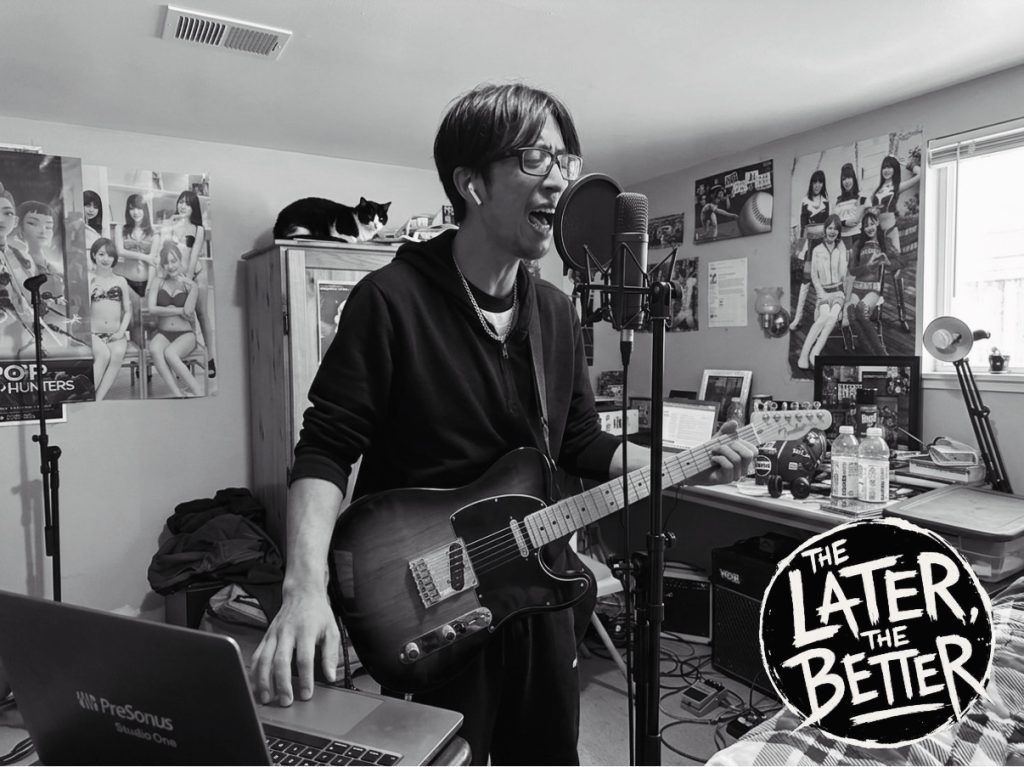
Patrick’s delivery is passionate and earnest here. The Later, The Better favors a cleaner, melodic rock approach, with a hopeful, anthemic vocal tone that softens some of the project’s usual punk abrasion. The mood is uplifting, triumphant, and motivational, like an inspirational rock anthem pushed through a fuzzy punk filter.
“Here I Cum” swings hard in the opposite direction. High-gain distortion and a bright, treble-heavy garage sound frame a blistering, high-tempo punk beat, with crashing cymbals and rapid snare fills adding to the rush. The song moves quickly and almost breathlessly. Lyrics arrive in rapid-fire succession, recalling the manic momentum of early ’80s hardcore punk.
The vocals sit prominently in the mix, and their unpolished delivery fits the song’s frantic desire for rock stardom. Its subject is unabashed ambition, the urge to overcome a difficult background, and the adrenaline that comes with chasing something bigger. The result is rebellious and chaotic, with the sweaty immediacy of underground skate punk blasting through a crowded club.
“Shattered Glass” is built around a thick wall of sound. Fuzzy guitars, a bass-heavy low end, and a thumping repetitive kick drum create the impression of a cramped basement performance. Underneath it all is a relentless, chugging garage-rock groove. The rhythm feels defiant and clipped, while the vocals land like short punches against the biting instrumentation.
The Later, The Better leans into a classic Sub Pop grunge character on the track, using gravelly, guttural vocal fry to express resilience in the face of online critics. The mood is gritty, defensive, and strangely celebratory. Negative energy becomes fuel, and the song turns that hostility into something close to a musical shield.
“Long Ways to Go!” opens the sound up. Cleaner guitar tones in the verses and a wider stereo field give it a more atmospheric quality, while syncopated snare accents keep its mid-tempo, reflective rhythm moving forward. The song is melodic and narrative-driven, with elongated phrasing that gives the lyrics room to settle into the arrangement.
The vocal performance sounds weary yet resilient, capturing the perspective of an aging musician looking back on past relationships. Nostalgia, aging, broken connections, and the value of genuine loyalty sit at the center of the song. Its mood is contemplative, bittersweet, and grounded, offering a reflective pause without losing the EP’s underlying sense of motion.
Closing track “Karma” pares things back again, focusing on the tension between a jagged guitar riff and the vocal line. As the song develops, the arrangement grows more erratic and punchy. Sudden stops and starts mirror its uneasy tone, while the kick drum and snare reinforce the unpredictable flow.
Patrick’s impressive guitar showmanship becomes the focal point, giving the track a definitive sense of climax. “Karma” leaves behind a serious, lingering atmosphere and closes “Not Dead. Just Punk Rock.” with an uncompromising punk exclamation point.
“Not Dead. Just Punk Rock.” is streaming now.